
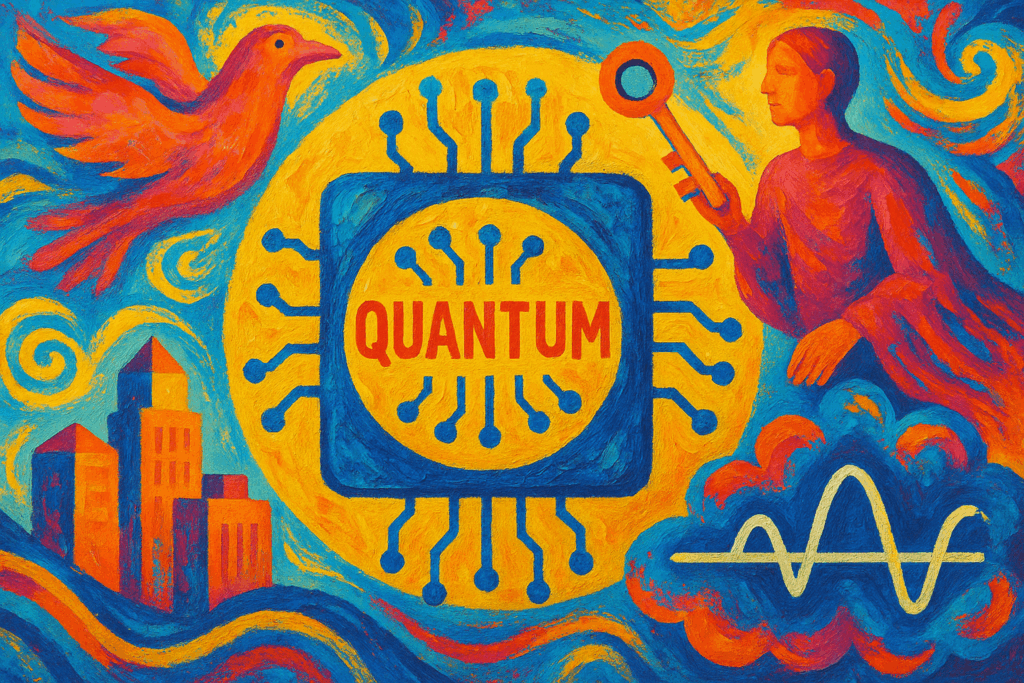
Quantum Infrastructure in 2026: Key Shifts and Progress
Quantum technology is moving from lab demonstrations toward the foundations of future digital infrastructure. By 2026 the focus is shifting from headline qubit counts to integrated stacks that deliver reliable, auditable services for business, government, and research.
Strengthening Security with Post-Quantum Cryptography
Post-Quantum Cryptography adoption is now an operational priority. The “harvest-now, decrypt-later” threat drives accelerated migration plans across regulated sectors. Expect clearer regulatory timelines, vendor PQC toolkits, and phased rollouts: inventory sensitive archives, prioritize high-risk channels, and apply hybrid classical-plus-PQC algorithms where interoperability is required.
Hardware Evolution: Building Foundational Capabilities
Progress is steady across multiple modalities. Superconducting platforms push error rates down while photonic and neutral-atom systems scale connectivity differently. Small logical-qubit demonstrations and modular, distributed quantum processors point toward practical co-processing models rather than single monolithic machines. Error mitigation and early error-correcting codes are becoming routine milestones rather than speculative goals.
Software & Ecosystem: The New Focus
Software is the differentiator. Middleware, orchestration layers, and AI-native quantum platforms allow classical systems to call quantum resources reliably. Standardized APIs, simulation-as-a-service, and toolchains for quantum software engineering reduce integration friction. Expect increasing emphasis on testable contracts, benchmarking suites, and platform-agnostic libraries.
Beyond the Lab: Commercialization and Strategic Adoption
Finance, materials discovery, logistics, and energy systems show the earliest commercial value in hybrid workflows and advanced simulation. Governments are funding national testbeds and public-private partnerships to secure supply chains and build talent pipelines. Workforce programs now pair industry placements with focused curricula in control systems, quantum software engineering, and applied physics.
Quantum Sensing & Navigation
Sensing advances deliver resilient positioning, navigation, and timing alternatives, including magnetic anomaly navigation and quantum-enhanced inertial systems that reduce dependency on satellite signals.
Conclusion: The Road Ahead
By 2026 quantum becomes infrastructure: a layered ecosystem of cryptography, modular hardware, robust software, and workforce networks. Leaders should prioritize crypto migration, pilot hybrid applications, and invest in partnerships that combine national resources with commercial speed. The transition will be incremental but irreversible, and early strategic moves will shape competitive positions in the decade ahead.