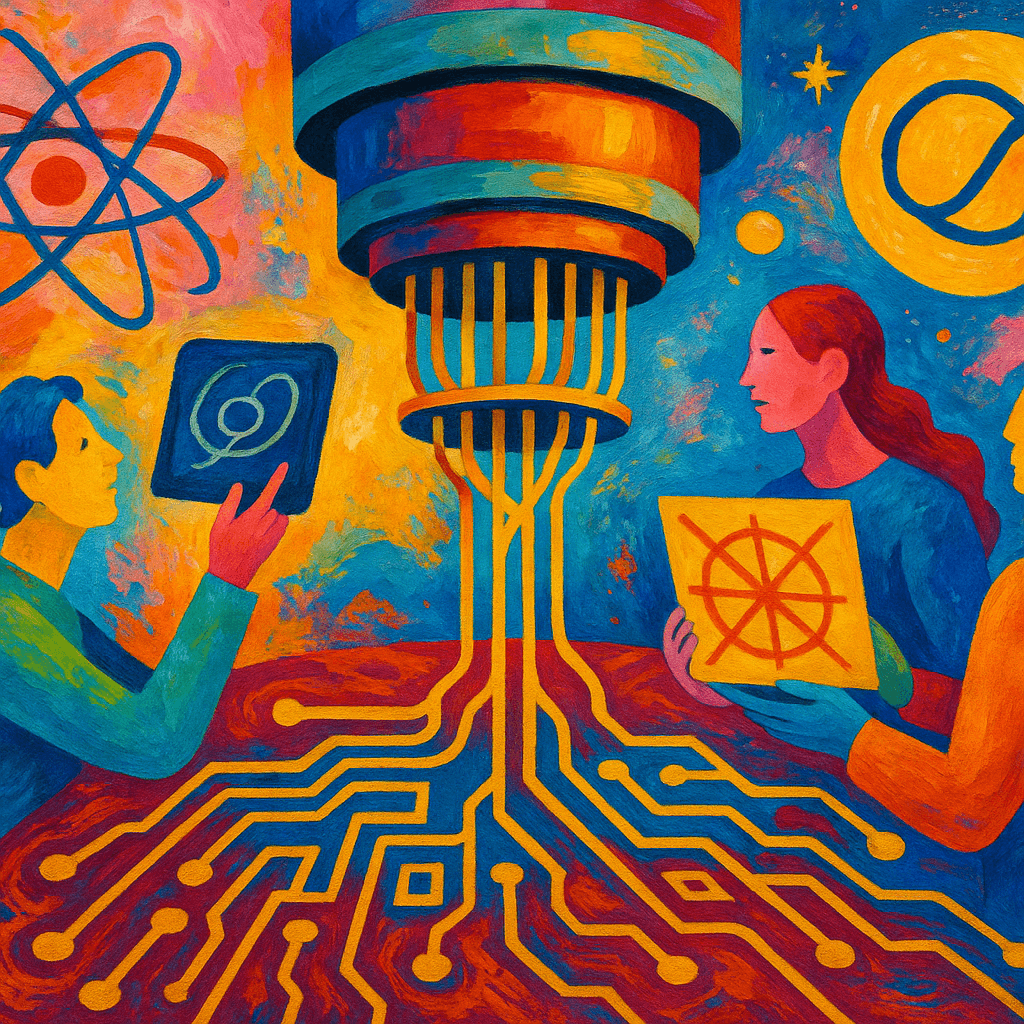

The Foundations of the Future: Understanding Quantum Infrastructure
Quantum infrastructure is the set of systems, networks and facilities that let quantum technologies operate at scale. It covers physical hardware, communication links, control electronics, specialized facilities and software layers that make quantum devices useful for real-world problems.
What Defines Quantum Infrastructure?
At its core, quantum infrastructure connects qubits to users, data and other machines. It includes the qubit platforms themselves, the networks that move quantum states or classical control signals, the cooling and shielding needed to preserve fragile states, and the software stack that schedules jobs and corrects errors.
Essential Components: Networks, Hardware, and More
- Quantum networks: Fiber and satellite links that support quantum key distribution and, eventually, entanglement distribution for a quantum internet.
- Quantum computing hardware: Superconducting circuits, trapped ions, photonic processors and spin qubits each bring trade offs in scale, speed and stability.
- Control and cryogenics: Low temperature systems and precision electronics maintain coherence and execute gates.
- Quantum sensors: Instruments that exploit quantum effects for ultra-sensitive measurement in navigation, imaging and detection.
- Security and cryptography: Quantum networks create new security models while motivating migration to quantum-resistant classical cryptography.
Current Progress and Future Horizons
Development is moving from lab prototypes toward modular, connected systems. Companies and governments are funding regional quantum centers, interconnect experiments and early network trials. Error correction remains the technical barrier to general purpose quantum advantage, but hybrid workflows that combine classical processors with quantum accelerators are delivering near-term value for optimization and material simulation.
Why This Matters for Tomorrow’s Technology
Robust quantum infrastructure will expand computing capabilities, unlock new sensing modalities and reshape secure communications. For AI, quantum processors offer specialized routes to accelerate certain classes of algorithms while networks enable distributed quantum resources. Continued investment in infrastructure accelerates adoption and creates an ecosystem where research, industry and users can build practical applications.
Quantum infrastructure is not a single product. It is an evolving ecosystem that will define how quantum technology moves from experiments to everyday tools.