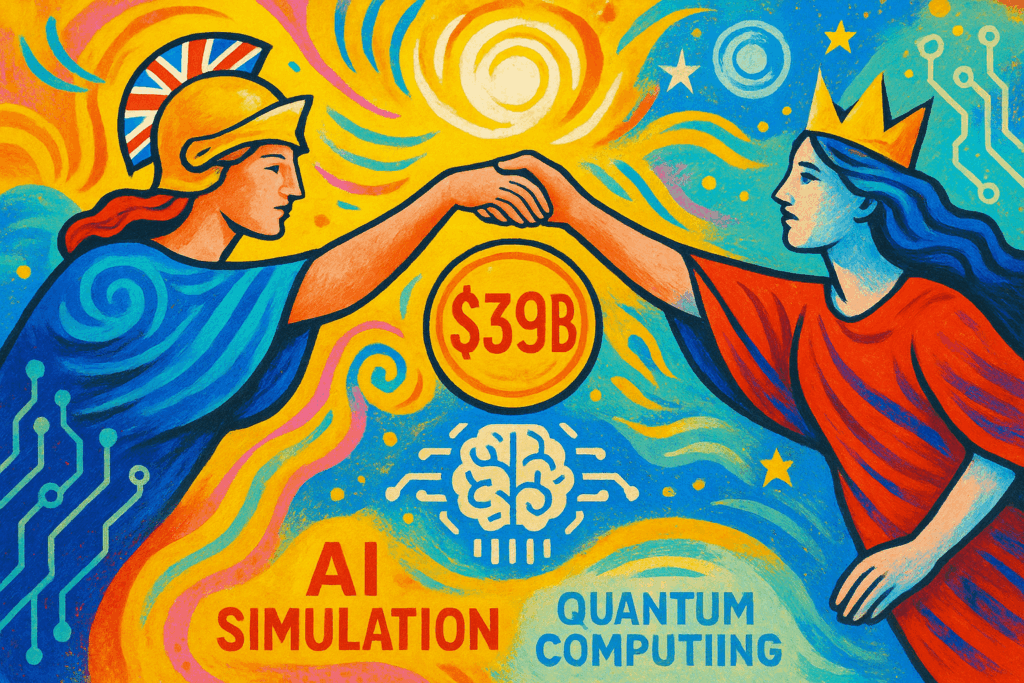

The Inevitable Convergence of AI and Quantum
Think of digital infrastructure as a layer cake. Compute, storage and networking form the base layers. AI has risen as a dominant top layer for inference and model training. Quantum computing is positioning itself as a new apex layer for specific classes of problems. For organizations that rely on high-value models and simulation, these layers will not replace one another. They will interoperate, with quantum applied where classical methods hit limits and AI orchestrating workflows across heterogeneous hardware.
From Hype to Horizon: Quantum’s Maturing Timeline
Perceptions about when quantum becomes commercially useful have shifted from distant optimism to near-term pilots. Public statements and platform moves from industry leaders such as NVIDIA and the so called Jensen Huang effect have signaled stronger industry interest in integrating quantum resources with GPU-centric AI stacks. That interest accelerates tooling, hybrid-cloud offerings and enterprise pilots, moving quantum from academic novelty toward operational use cases over the next several years.
Practicalities & Puzzles: Core Challenges in Quantum-AI Infrastructure
The Cryogenic Imperative
Quantum processors require extreme cooling that differs from the thermal profiles of AI GPUs. Maintaining millikelvin environments calls for dedicated cryogenics and facility design. Some data center operators have begun proving coexistence, for example by hosting cold chain quantum racks in separate, purpose-designed enclosures inside existing facilities.
Data Sovereignty and Private AI
Geopolitics and regulation are pushing workloads into regional or on-prem setups. Firms seeking to keep sensitive training data local will favor private AI deployments and localized quantum access, shaping where quantum-AI stacks get built and who can provide them.
The Critical Role of Interconnection
Interconnection and data flow are often the most underestimated elements. Distributed AI agents, large models and remote quantum nodes require planned, low-latency links and predictable bandwidth. Without deliberate network architecture, end-to-end latency and data transfer costs will erode potential gains.
Decoding ROI: Early Gains and Strategic Bets
Early pilots show measurable value against classical baselines in optimization and molecular simulation. Financial firms such as HSBC and life sciences startups like Qubit Pharmaceuticals have reported early-stage improvements in portfolio and candidate evaluation workflows through quantum-assisted approaches. The highest near-term ROI appears in financial services, life sciences and industrial simulation where even marginal model improvements yield outsized value.
Preparing for the Quantum-AI Future
Tech leaders should monitor regulatory shifts, run targeted pilots where quantum prospects align with strategic value, and invest in interconnection and private infrastructure plans. Form partnerships across hyperscalers, quantum providers and specialized data center operators to test hybrid deployments. The most prepared organizations will be those that map use cases to the right layer of the stack and plan data flow from the outset.