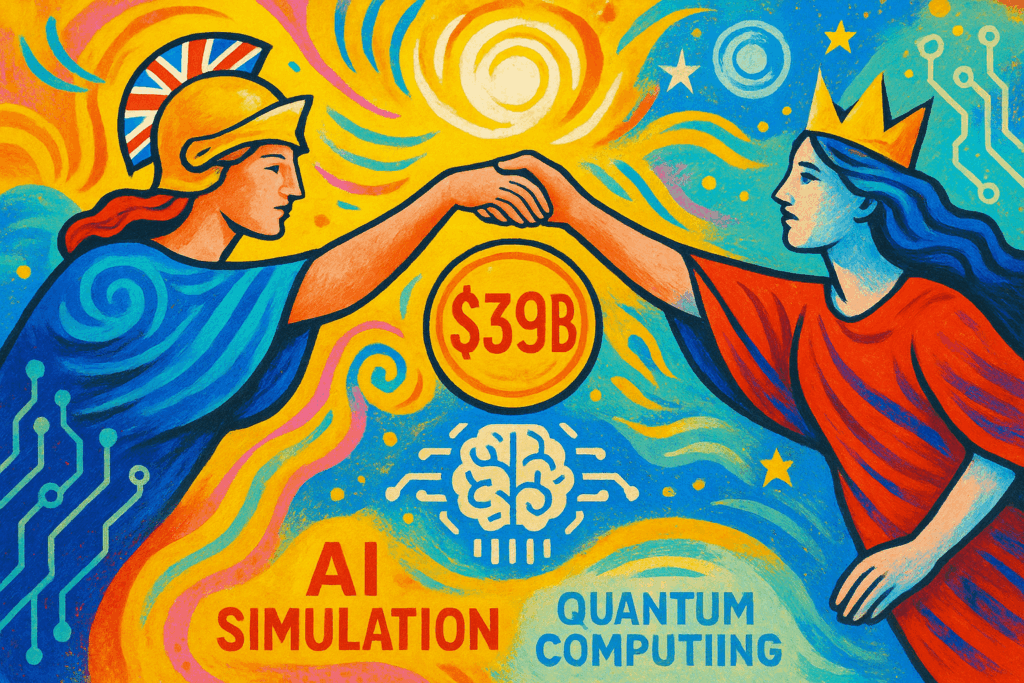

The layer cake metaphor helps: base infrastructure, cloud and data, AI as the penultimate layer, and quantum computing topping the stack as a new accelerator for simulation and optimization. Recent momentum, often called the Jensen Huang effect after NVIDIA’s role in accelerating AI hardware adoption, has shortened quantum deployment timelines and pushed integration from theory toward pilot and production.
The Imminent Convergence of AI and Quantum
AI workloads already pull together massive, diverse datasets and specialized hardware. Quantum computing promises new classes of simulation that can feed next-generation AI models. That blending shifts timelines: investments by cloud providers and partnerships between hardware and software vendors (NVIDIA, IBM) plus early adopters such as Qubit Pharmaceuticals create a feedback loop that accelerates practical experimentation and integration.
Strategic Challenges: Security and Sovereignty
Two forces are shaping corporate strategy. First, geopolitical pressure and tighter data regulations push firms toward private AI deployments and regionalized infrastructure to meet data sovereignty requirements. Second, the Q-day threat means encrypted data captured today could be decrypted once sufficiently powerful quantum systems exist. Organizations must move toward post-quantum cryptography and follow standards from bodies such as NIST while rethinking key management and archival secrecy.
Quantum hardware also raises novel physical security considerations. Many quantum processors require cryogenics, vibration isolation and electromagnetic shielding. These conditions change where and how hardware can be colocated. Traditional data center security models must adapt to handle physical access, environmental risk and supply chain assurances. Insights from providers like Equinix underscore the need for flexible, sovereign-ready interconnection and controlled facility design.
Real-World Impact and Future Readiness
Early applications are material: financial services can use quantum-accelerated simulation for portfolio risk and bond market operations, while life sciences firms like Qubit Pharmaceuticals target molecular simulation and discovery. But interconnected AI systems increase exposure points across data pipelines and model interfaces.
Actionable steps now: inventory cryptographic assets and lifecycle risk, begin hybrid deployments with sovereign enclaves, adopt NIST-aligned post-quantum algorithms, assess facility requirements if hosting quantum hardware, partner with experienced colocation and cloud providers, and run tabletop exercises for Q-day scenarios. Organizations that plan now will contest advantage as quantum-enabled AI moves from experiment to enterprise capability.