
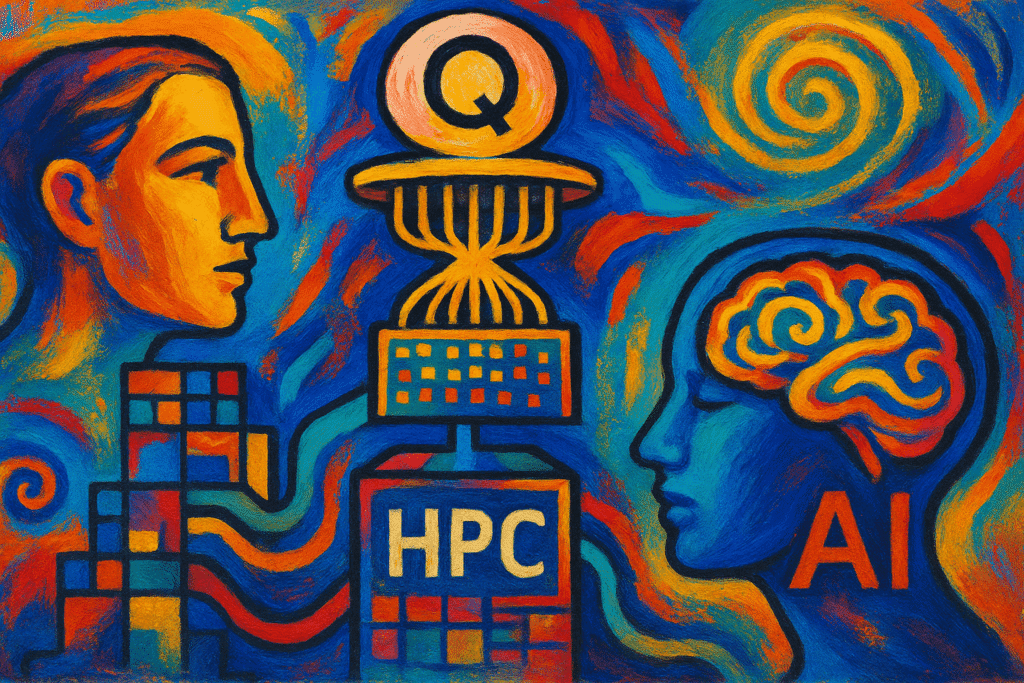
Quantum computing is moving from standalone curiosity to a practical accelerator inside broader computing stacks. For researchers and decision-makers, the sensible shift is toward hybrid quantum-classical systems that pair quantum processors with high-performance computing and AI to tackle problems where quantum mechanics offers a real advantage.
The Dawn of Hybrid Quantum Computing
Rather than replacing classical machines, quantum devices are positioned as specialized co-processors for workloads that map naturally to quantum mechanics. Limited qubit counts, noise, and the slow pace of full fault tolerance mean near-term value comes from hybrid workflows where classical HPC handles data orchestration, pre- and post-processing, and scalable heavy lifting, while quantum units attack the computational kernels best suited to them.
Beyond Hype: Real-World Applications Emerge
Expectations have matured from broad promises to targeted, niche applications. Practical use cases include molecular simulation for drug discovery, materials discovery where quantum effects matter, combinatorial optimization in logistics and finance, and components of personalized medicine models. These are problems where quantum subroutines can improve precision or reduce compute time versus purely classical approaches.
The Integration Imperative: Software and Orchestration
Delivering hybrid value is an engineering challenge. Teams must build middleware, orchestration layers, and standardized APIs that connect quantum runtimes to MPI clusters, GPU farms, and AI pipelines. Key obstacles include error correction and fault tolerance, latency between cloud-hosted quantum hardware and on-prem HPC, and a need for higher-level developer tools and libraries that make hybrid programming accessible to domain scientists.
The Path to Practical Quantum
Quantum computing will reach broad scientific and industrial adoption by fitting into existing infrastructures. Progress will come through co-design of algorithms and hardware, cloud-based hybrid platforms, and incremental wins on targeted problems. The practical future is symbiotic: classical HPC and AI provide scale and robustness while quantum processors offer new compute primitives for problems that require quantum properties.
For investors and technical leaders, the priority is not waiting for perfect qubits. It is building the software, orchestration, and application pipelines that let quantum add measurable value today and scale tomorrow.