
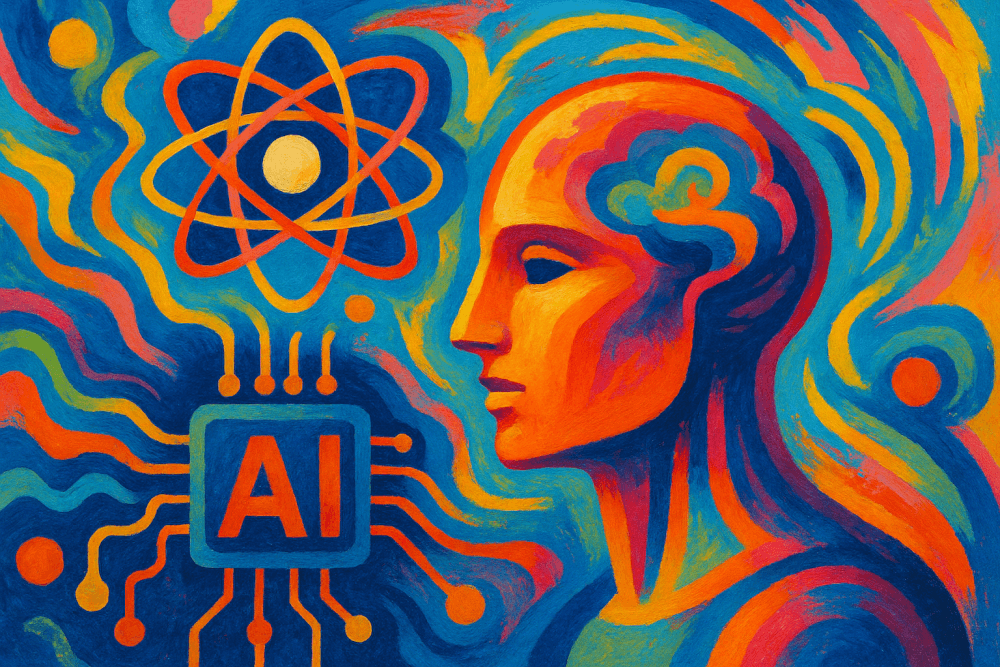
Quantum AI’s Emerging Impact
Quantum computing and artificial intelligence are coming together to tackle problems that stretch classical machines. This convergence promises faster data processing and fresh algorithmic approaches that could change how researchers and businesses approach modeling, optimization, and discovery over the next decade.
The Quantum Edge for Artificial Intelligence
Solving Complex Problems Faster
Quantum processors use quantum bits that can represent many states at once, offering parallelism that classical bits cannot match. For certain tasks like high-dimensional optimization and sampling, quantum hardware can reduce run times and explore solution spaces more broadly. Today most gains are niche and require hybrid quantum-classical workflows, but progress in hardware fidelity and error mitigation is widening practical use cases.
Unlocking New AI Algorithms
Quantum mechanics enables algorithmic primitives that differ from classical approaches, such as quantum-enhanced sampling and variational algorithms. These methods can lead to new machine learning models and training strategies that are better suited to specific classes of problems. Research labs and startups are already testing quantum neural network prototypes and quantum-assisted feature selection in controlled settings.
Future Applications and Outlook
Potential applications span drug discovery, materials design, portfolio optimization, logistics, and climate modeling. In drug discovery, quantum-assisted simulations could model molecular interactions with higher accuracy. In finance, quantum methods may speed Monte Carlo simulations for risk assessment. Broad, everyday AI improvements will likely take years, while targeted advantages in research and optimization may arrive sooner as NISQ-era devices improve and hybrid algorithms mature.
What This Means for Innovation
The fusion of quantum computing and AI opens new avenues for scientific insight and industry efficiency. Stakeholders should watch hardware milestones, algorithm benchmarks, and early commercial pilots. Organizations that experiment now with hybrid workflows and partnerships will be better positioned to adopt more powerful Quantum AI tools as the technology matures.