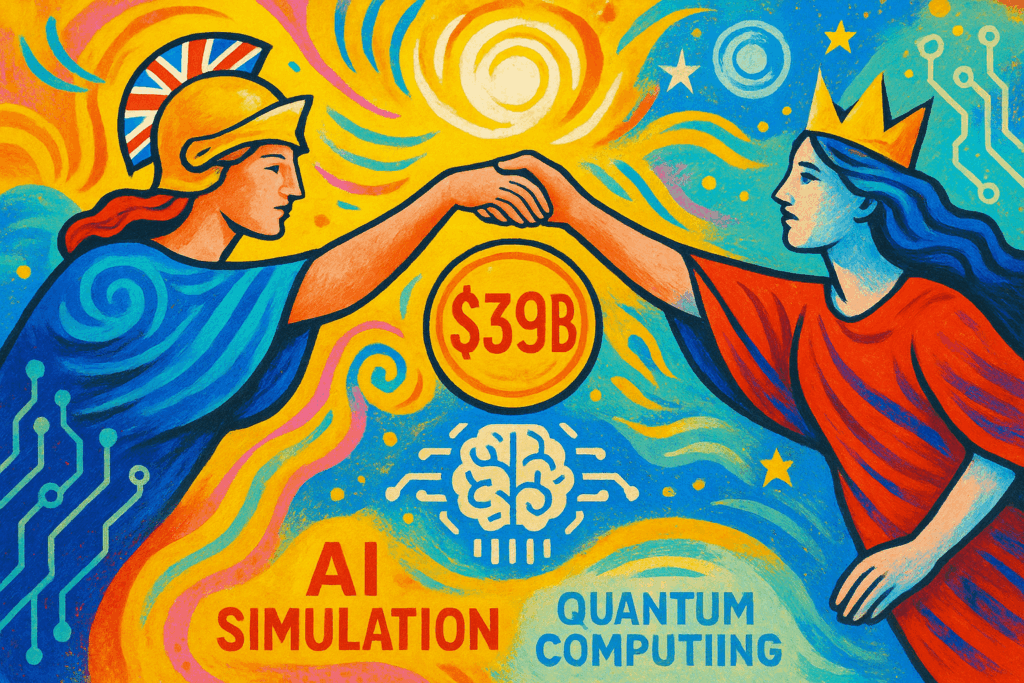

2025 marked a shift: artificial intelligence moved from experimental pilots to broad enterprise deployment while quantum computing produced demonstrations that make complex simulation practical. For tech leaders and investors, the moment calls for targeted strategy, strong governance, and new technical partnerships.
AI’s Maturation: Deep Integration and Ethical Considerations
Generative models and large-scale predictive systems were embedded across finance, logistics, and R&D workflows. Companies adopted AI for decision support, end-to-end supply chain forecasting, and scenario planning. Deployment challenges included model drift at scale, data governance gaps, and workforce transitions as automation redefined roles. Regulators tightened oversight; the EU accelerated enforcement of AI rules and multiple jurisdictions published clearer guidance on data privacy and model transparency. Firms that paired technical controls with reskilling programs fared better at adoption and public trust.
Quantum Leaps: Solving Complex Simulations
Quantum hardware advanced beyond laboratory milestones toward practical simulation. Multiple teams reported progress on error-corrected qubits and modular architectures that let researchers run chemically relevant simulations with higher fidelity than classical approximations. That translated into accelerated lead generation in drug discovery and more realistic stress scenarios in financial modeling. Quantum advantage remains selective, but hybrid quantum-classical workflows delivered measurable speedups for tightly constrained problems where quantum kernels reduced computational depth.
The Future Landscape: Synergy and Strategic Imperatives
The combined power of AI and quantum is already reshaping use cases where simulation fidelity matters most. AI models ingest and learn from quantum-derived datasets, while quantum processors test physics-rich hypotheses that classical systems cannot tractably compute. For executives and investors the priorities are clear: fund hybrid R&D, adopt robust data and model governance, invest in talent bridges between ML and quantum engineering, and pursue partnerships that accelerate field validation. Responsible deployment will determine which organizations capture value while limiting societal risks around privacy and labor displacement.
2025 did not answer every question, but it reframed priorities. Advanced simulation is no longer only aspirational. It is the locus where AI and quantum start to produce tangible, industry-changing outcomes.