Unlocking New Realities: AI and Quantum Simulation
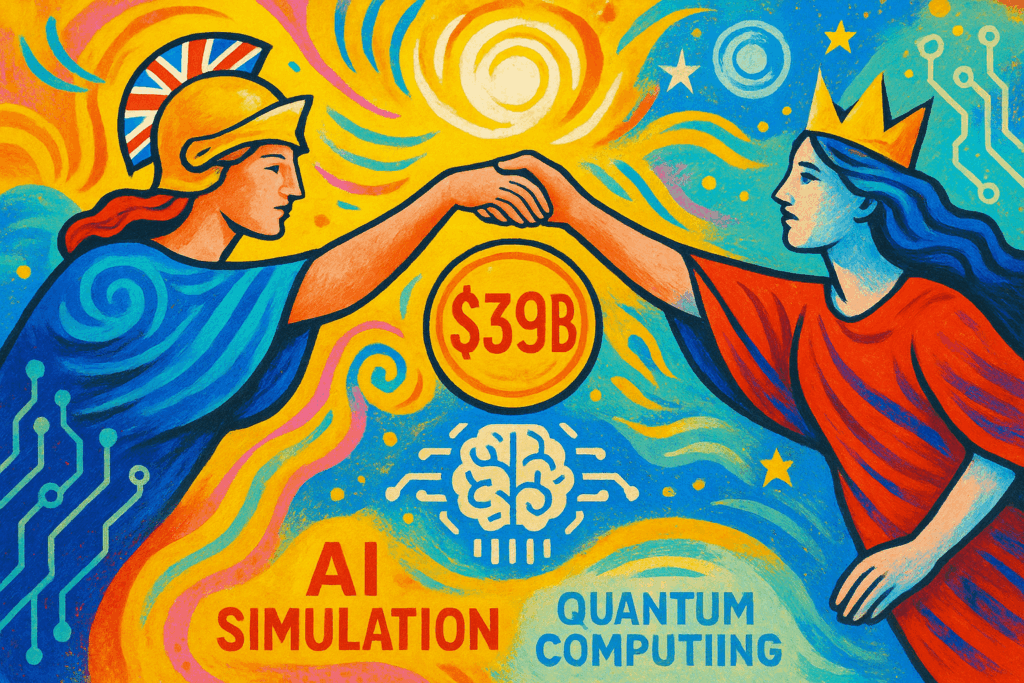
Recent research reported in 2026 reveals a new approach that combines machine learning with quantum simulation methods to model complex quantum systems faster and with fewer quantum resources. The method trains classical AI models to predict quantum dynamics and to guide hybrid quantum-classical algorithms, reducing the number of qubits and circuit depth needed for accurate results.
A New Era of Computational Power
At the core is a feedback loop: AI learns from a small set of quantum experiments or high-fidelity simulations, then generates surrogate models that approximate many-body behavior. These surrogates let researchers run broader parameter sweeps on classical hardware and reserve quantum hardware for targeted corrections. Techniques include neural-network quantum states, variational training guided by AI, and machine-learned error mitigation. The net effect is faster simulation throughput and lower experimental overhead.
Real-World Impact: What This Means
Short-term, labs can probe larger molecules and materials with existing noisy quantum processors. Two near-term applications stand out:
- Drug discovery: AI-accelerated quantum models can map candidate molecule energetics more rapidly, narrowing leads before costly lab tests.
- Material design: Simulations of quantum materials and catalysts become tractable at scales previously out of reach, speeding prototype cycles.
The Path Ahead: Potential and Challenges
The approach promises major efficiency gains but faces hurdles. Robust generalization of AI surrogates across different quantum regimes is not guaranteed. Integration with error-corrected quantum hardware remains a medium-term goal. Security, model interpretability, and reproducibility standards will need firming up as tools migrate from labs to industry.
QuantumAI Insiders’ Take
This development marks a practical step toward combining AI and quantum tools for real scientific workflows. Investors and R&D teams should watch for early commercial pilots in pharma and materials, partnerships between AI startups and quantum hardware providers, and open benchmarks that validate claimed speed and accuracy improvements.