
A New Era for Earth Observation
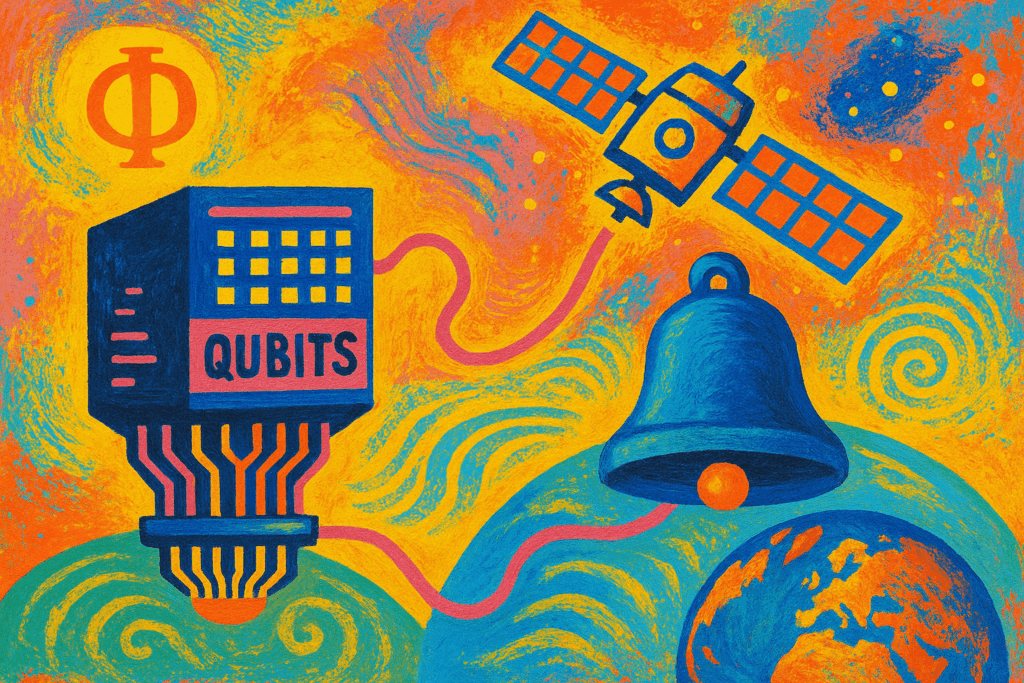
Equal1 has commenced deployment of its Bell-1, a hybrid quantum computer, at the European Space Agency’s Φ-lab. The Φ-lab specializes in Earth observation research, intending to improve the analysis of satellite data related to environmental monitoring and climate science. Bell-1 is designed to process complex datasets rapidly, enabling more precise modeling and real-time assessments that can support scientific and policy decisions around the planet’s evolving conditions.
The Power of Hybrid Quantum Computing
Hybrid quantum computing integrates quantum processors with classical computing architectures, combining their strengths. While classical computers handle established algorithms efficiently, quantum processors aim to tackle specific optimization and simulation tasks that traditional methods find challenging. Bell-1 uses this fusion to address Earth observation problems that require enormous computational resources, facilitating more accurate interpretations of satellite imagery and sensor data.
Looking Ahead: Impact and Potential
The collaboration between Equal1 and ESA through the Bell-1 deployment promises new insights into environmental systems. With the hybrid approach, researchers can explore intricate climate models and large-scale satellite datasets more effectively, contributing to improved forecasting and resource management. Equal1 and ESA’s Φ-lab share an ambition to harness quantum technology for practical, data-driven results that can support sustainable development and scientific discovery.
By combining quantum and classical computing capabilities, the Bell-1 at ESA represents a significant step in applying advanced computation methods to Earth observation challenges, marking progress toward a future where quantum technology underpins critical environmental research.