Introduction
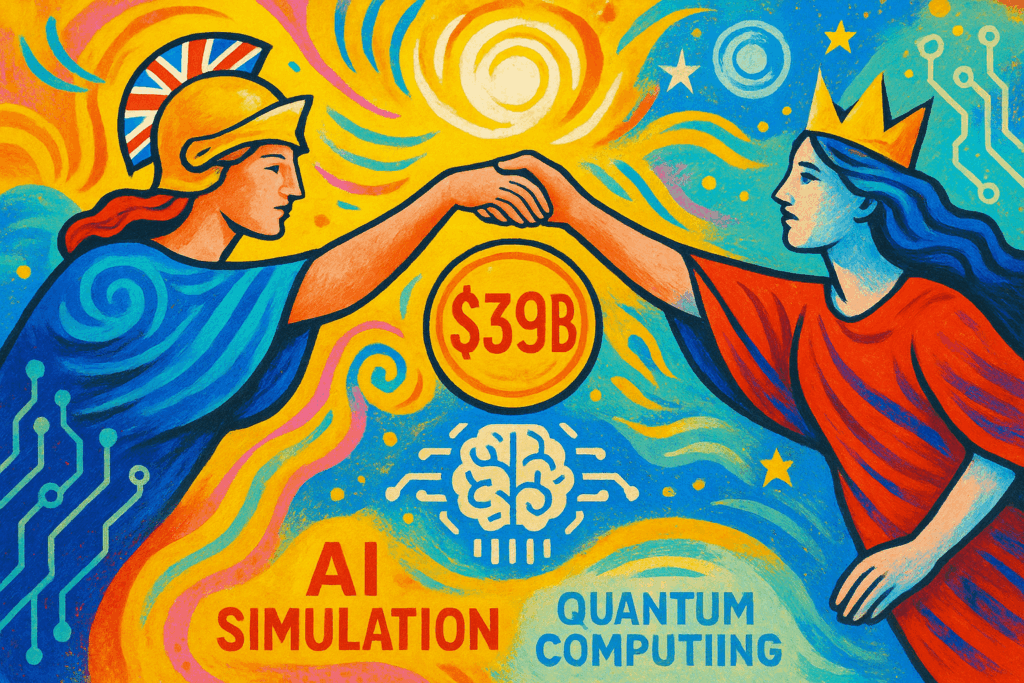
IBM has been selected to support the U.S. Department of Energy’s Genesis Mission, providing roughly $50 million in quantum access as part of a broader effort to unite AI, high-performance computing, and quantum hardware to speed scientific breakthroughs. The partnership aims to move quantum computing from proof of concept to practical scientific application in national laboratories.
AI Pioneers Quantum Application Discovery
At the heart of IBM’s contribution is an “algorithm-first AI” workflow. Rather than starting from a named scientific problem, agentic AI systems comb scientific literature, datasets, and algorithm libraries to identify where existing quantum algorithms could yield advantage. The AI maps candidate algorithms to real research questions, proposing experiments and resource mixes that human researchers then validate. This approach can surface unexpected, high-value use cases that traditional problem-first workflows may miss.
Integrated Power: Quantum, AI, and HPC
IBM will make quantum processors such as the 156-qubit Heron and the 120-qubit Nighthawk available to DOE labs including Oak Ridge. In practice, the workflow splits labor: the algorithm-first AI narrows the research space and suggests targeted problems; classical supercomputers run large-scale simulations, preprocessing and postprocessing data; and quantum systems are reserved for the subproblems where they can offer a computational edge, such as electronic structure or optimization primitives. For molten salt research, for example, AI can identify specific reaction pathways or defect configurations, HPC can generate thermodynamic baselines and large ensembles, and quantum hardware can target the most computationally intensive quantum chemistry calculations to refine predictions.
Advancing Scientific Frontiers
By combining agentic AI, HPC, and quantum hardware, the Genesis Mission establishes a practical hybrid model for discovery. The effort aims to accelerate research timelines, open new classes of tractable problems, and set a template for future collaborations between national labs, industry, and academia that move beyond isolated technology demos to integrated scientific outcomes.