Microsoft’s Hybrid Quantum-AI Strategy for Chemistry
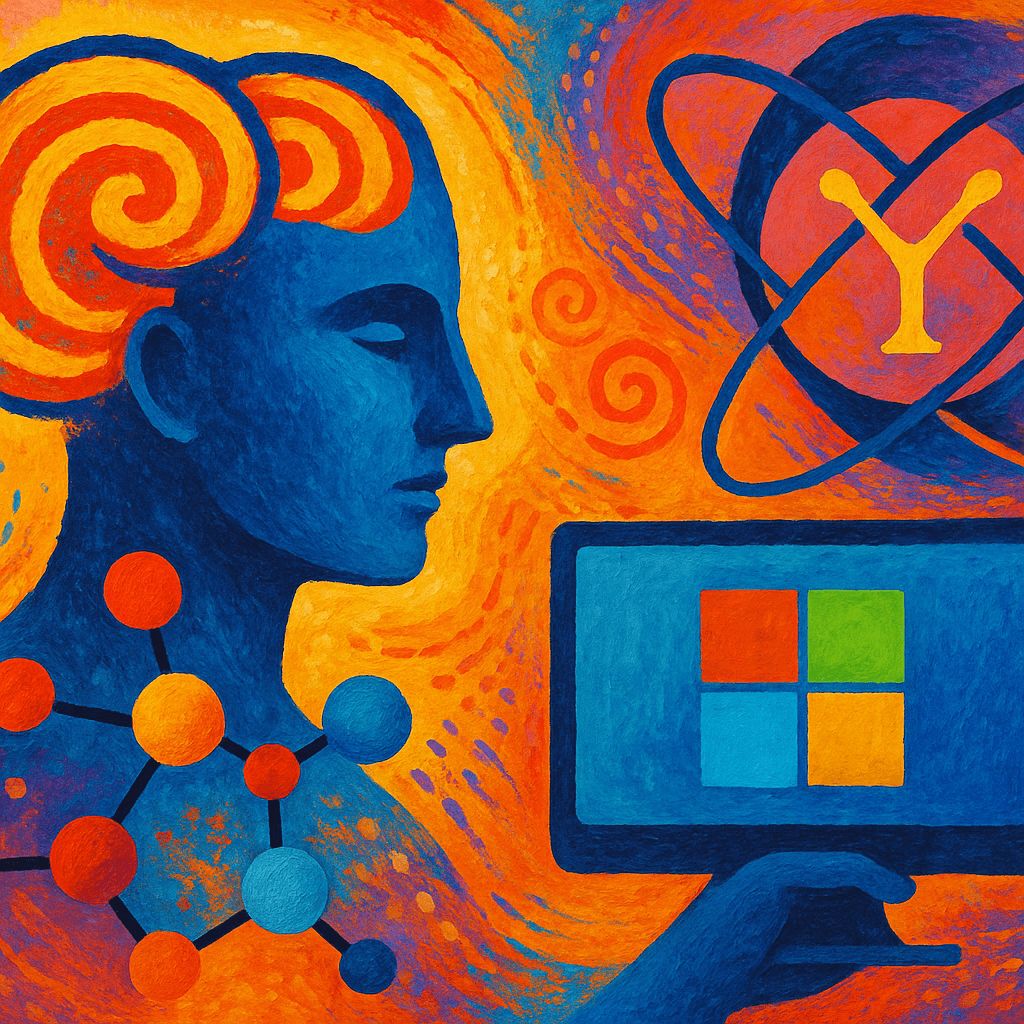
Microsoft is combining quantum computing and artificial intelligence to push chemical simulation beyond classical limits. The company uses quantum devices to generate high-fidelity electronic-structure data and then trains AI models on classical hardware to deliver rapid, accurate predictions across chemical space. This hybrid workflow targets accuracy levels on higher rungs of Jacob’s Ladder that were previously out of reach for practical computation.
Jacob’s Ladder and the problem of accuracy
Jacob’s Ladder is a metaphor for the tiers of electronic-structure methods used in chemistry, from simple approximations at the lower rungs to highly accurate, computationally intensive methods at the top. Climbing the ladder improves accuracy but costs grow steeply. Microsoft aims to reach those upper rungs by using quantum simulation to supply the high-quality data needed for AI that can generalize at scale.
Overcoming electron correlation with hybrid computing
Electron correlation refers to how electrons influence each other in a molecule. Accurately capturing these interactions quickly becomes intractable for classical algorithms because computational cost grows exponentially with system size. Quantum computers can naturally represent complex electronic wavefunctions, producing data that mirrors true quantum behavior. That data trains machine learning models on classical systems, creating hyperaccurate predictors that run orders of magnitude faster than raw quantum simulation.
Accelerating discovery: real-world applications
This approach shortens discovery cycles in areas where precise electronic detail matters. Examples include:
- Battery development: identifying safer, higher-capacity chemistries and faster electrolyte screening
- Drug discovery: predicting binding and reaction pathways with greater fidelity
- Climate mitigation: designing catalysts for carbon conversion and pollutant breakdown
- Waste transformation: converting complex waste streams into usable materials
By marrying quantum-generated ground truth with scalable AI, Microsoft’s strategy promises faster R&D, lower experimental overhead, and new materials and molecules that were previously too costly to explore. For investors, researchers, and industry leaders, the practical payoff is clearer timelines and more targeted experiments driven by hyperaccurate models.