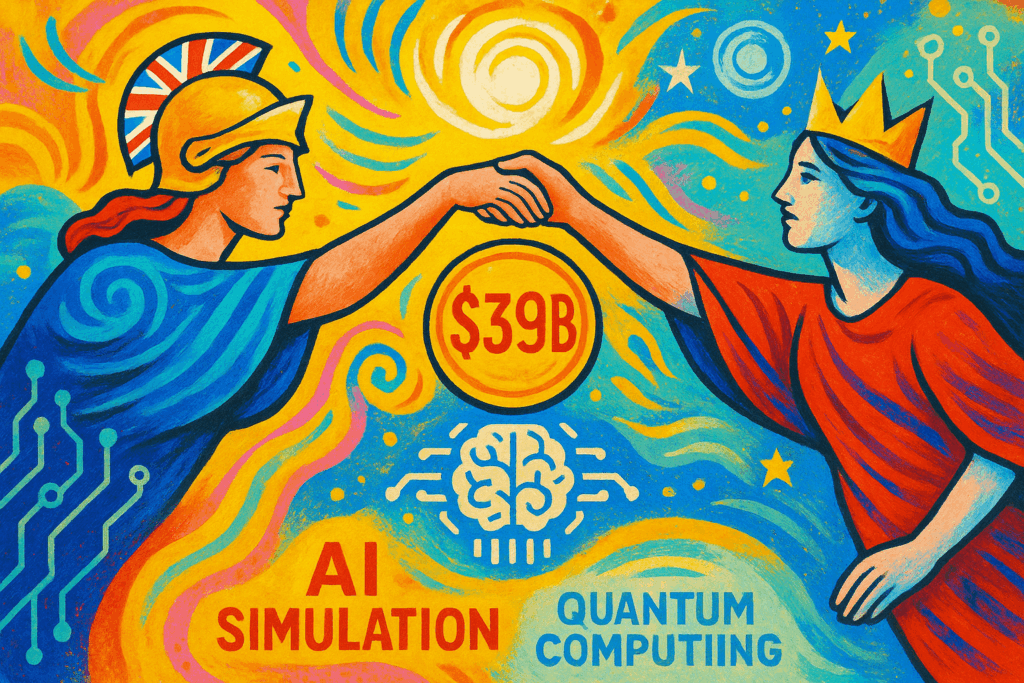

AI simulation models virtual behavior of systems to predict outcomes, test hypotheses and optimize decisions. Quantum computers change the computational landscape by representing complex probability spaces more naturally than classical machines. That shift promises faster sampling, richer model representations and new routes to solve problems that are intractable today.
What is quantum-powered AI simulation?
Quantum-powered AI simulation combines machine learning methods with quantum processors to run simulations that exploit superposition and entanglement. Instead of encoding every possibility on classical bits, quantum states can represent high-dimensional distributions compactly. This is not a universal win for every model, but it offers genuine advantages for tasks where probabilistic inference, combinatorial structure or many-body interactions dominate.
Unlocking New Frontiers: Key Advantages
Quantum approaches can reduce the complexity of sampling from difficult distributions, speed up certain optimization routines and model correlations that are costly for classical networks. Practical applications include drug discovery, where quantum simulators can evaluate molecular energy landscapes more efficiently; financial modeling, for scenario analysis and portfolio optimization; materials design, for predicting properties of quantum materials; and climate or systems biology models with many interacting components.
The Path Forward for Quantum AI
Significant obstacles remain. Current hardware is noisy, qubit counts are limited and error correction is under development. Algorithm research is active: hybrid quantum-classical workflows, variational algorithms and specialized quantum samplers are most promising in the near term. Expect incremental, application-specific payoffs before broad disruption. Over the next five to ten years, practical gains will likely appear in niche, compute-bound domains where classical methods hit clear bottlenecks.
For professionals and investors, the takeaway is measured optimism. Quantum-powered AI simulation will not replace classical methods overnight, but it will redefine how teams tackle the hardest simulation problems, opening new possibilities for discovery and decision making when the technology and software mature.