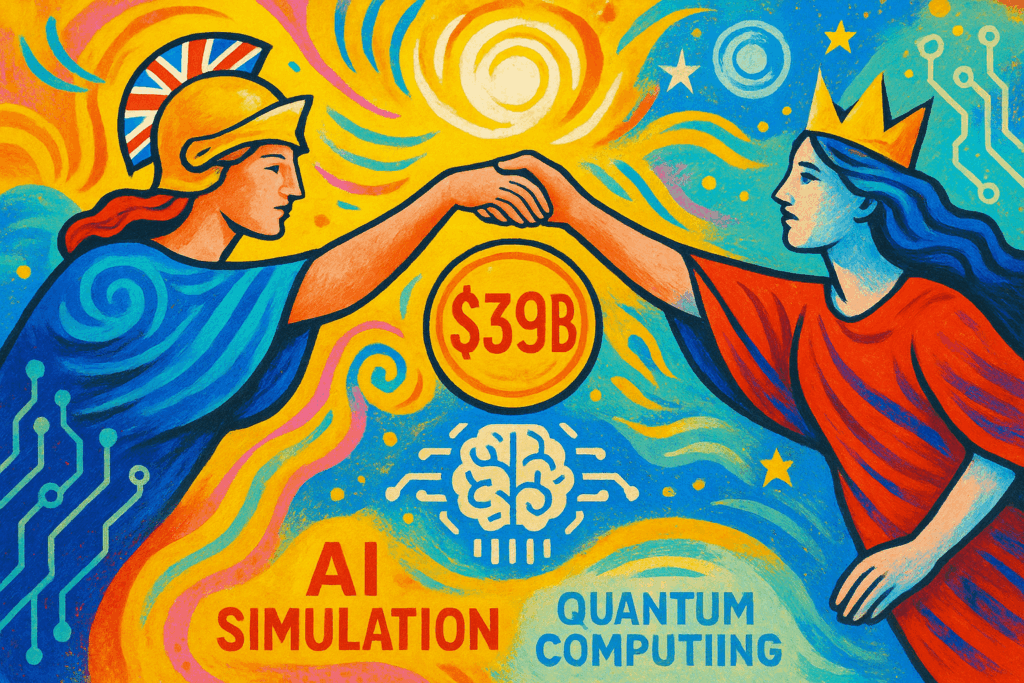

The Convergence: AI Meets Quantum Simulation
AI and quantum simulation are combining to tackle problems that were once out of reach for classical computing. Machine learning algorithms act as intelligent proxies for complex quantum processes, and quantum devices supply novel data and computational primitives. For researchers and decision makers this means faster hypothesis testing, more accurate models of quantum systems, and a practical path from laboratory results to commercial applications.
Driving Breakthroughs: Key Benefits of AI in Quantum
AI speeds up simulation workflows by replacing expensive subroutines with learned surrogates, reducing compute time and cost. Reinforcement learning and evolutionary methods discover efficient quantum circuits and experiment schedules. Generative models help represent many-body quantum states with compact parameterizations, improving scalability. AI also drives error mitigation and calibration, extracting useful results from noisy intermediate-scale devices. The result is accelerated materials discovery, more reliable quantum chemistry predictions, and optimization routines that reach better solutions with fewer quantum resources.
Strategic Outlook: Challenges and Future Prospects
Significant obstacles remain. Quantum hardware noise and limited qubit counts constrain direct application. Training data scarcity and transferability between hardware platforms undermine some ML approaches. Interpretability of learned models is an open research topic, and standards for benchmarking hybrid workflows are still emerging. Over the next 3 to 7 years we can expect steady progress: improved simulators, tighter hardware-software co-design, and specialized model libraries that scale across platforms. Collaboration between academic labs, cloud providers, and startups will be the main driver of practical milestones.
Why This Matters for Your Portfolio
For investors and corporate strategists, AI-enabled quantum simulation points to multiple entry points: software platforms, tooling for hybrid workflows, and domain-specific applications in materials and drug discovery. Look for teams that pair quantum expertise with strong ML talent and clear paths to revenue through cloud services or partnerships with established R&D groups. Risk is real, but disciplined exposure to proven teams and modular technologies can capture asymmetric upside as the field matures.