
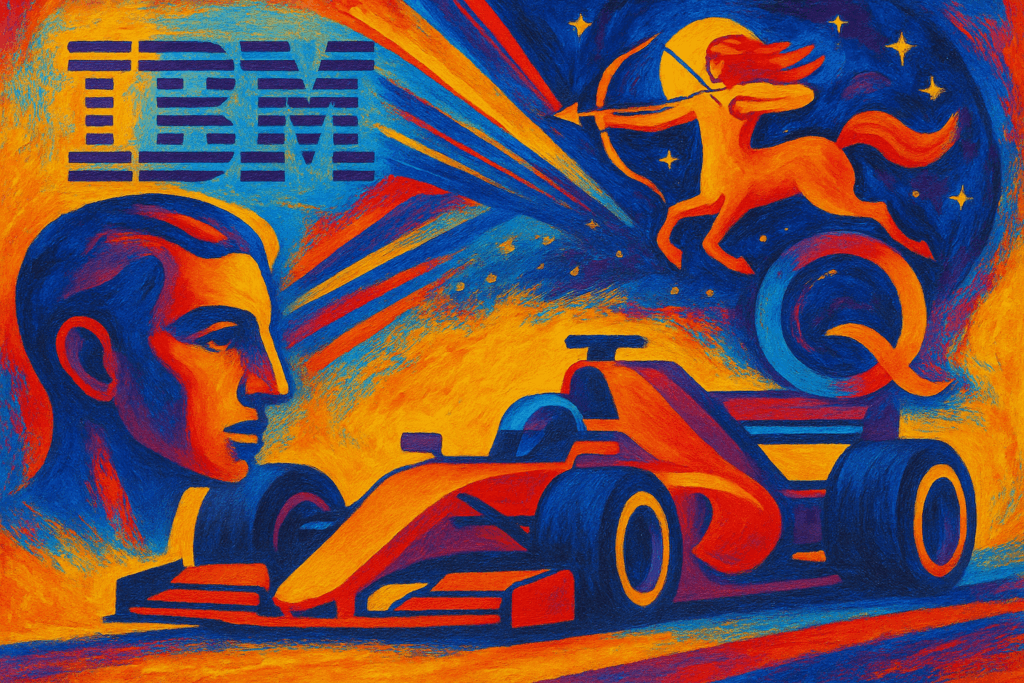
IBM and Dallara Pioneer AI-Powered Vehicle Design
IBM and Dallara have launched a collaboration to speed design cycles for high-performance vehicles by pairing physics-based AI foundation models with advanced simulation workflows, while exploring quantum computing for future gains. The effort targets aerodynamics and rapid evaluation of complex vehicle components.
AI Transforms Simulation Speed and Efficiency
Traditional computational fluid dynamics (CFD) simulations can take hours or days to evaluate a single geometry. IBM and Dallara trained physics-based AI foundation models on Dallara’s proprietary design and test data to predict aerodynamic performance far faster. In trials, model-driven evaluations of a race car component moved from several hours to a few seconds, allowing engineers to iterate designs in real time. That shift turns evaluation bottlenecks into interactive workflows, compressing the number of design cycles and improving design workflow optimization. These foundation models combine learned patterns with physical constraints so predictions remain physically consistent while dramatically reducing compute costs for routine evaluations.
The Future: Quantum Computing for Deeper Insights
Beyond AI acceleration, IBM and Dallara are investigating quantum and hybrid quantum-classical approaches to address problems that strain classical solvers. Quantum processors could add fidelity for multi-scale turbulence, coupled fluid-structure interactions, and optimization across vast design spaces. While practical quantum advantage remains an emerging prospect, hybrid methods offer a path to richer simulations and new algorithms tailored to aerodynamic complexity.
Beyond the Track: Broad Industry Impact
Faster, more accurate simulation workflows have implications beyond racing. Passenger vehicles and aircraft stand to gain fuel efficiency improvements, shorter development timelines, and lower prototyping costs. For engineers, investors, and manufacturers, the IBM-Dallara approach signals a shift toward AI-first design pipelines with quantum computing positioned as the next frontier for solving harder aerodynamic problems across automotive and aerospace sectors.