
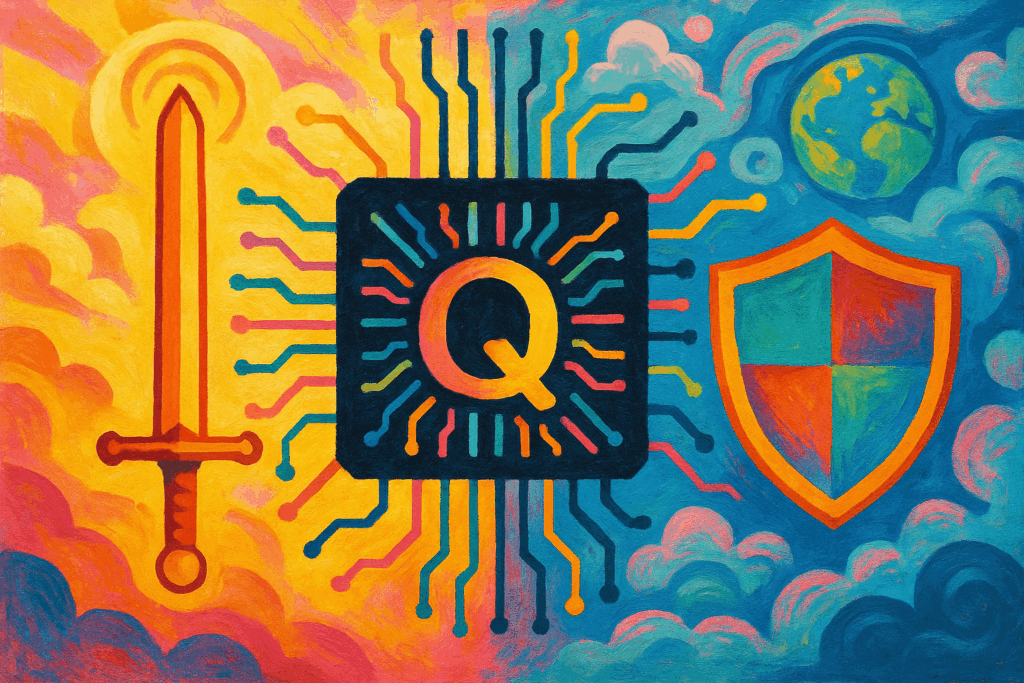
Quantum computing is shifting the foundations of digital security and national resilience. As quantum processors approach practical scales, their influence will span cryptography, cloud services, and AI-driven systems. The race to adapt is already shaping policy and investment worldwide.
The Quantum Shift: Redefining Digital Foundations
Quantum computers use quantum bits to process complex problems that classical machines struggle with. Beyond theoretical speedups, early practical applications include optimization for logistics, materials simulation, and accelerating AI model training through hybrid quantum-classical workflows. Cloud providers are offering quantum access, tying this technology directly into existing infrastructure and enterprise workflows.
Cybersecurity at a Crossroads: Threat and Opportunity
Quantum algorithms threaten widely used public-key systems such as RSA and ECC because they can factor large numbers and compute discrete logarithms far faster than classical methods. That vulnerability could expose long-lived secrets and protected archives. At the same time, quantum principles enable new forms of secure communication, including quantum key distribution, which can detect eavesdropping in real time. The net effect is a rewrite of threat models and defense capabilities.
Building Quantum Resilience: The Urgent Imperative
Quantum-safe cryptography refers to classical algorithms believed to resist quantum attacks. Standards bodies and national agencies are moving to standardize replacements for vulnerable protocols. Organizations must inventory sensitive assets, prioritize migration timelines, and adopt quantum-ready strategies to protect long-term confidentiality. Public-private collaboration and targeted investment are accelerating the transition.
Navigating the NISQ Era Towards a Secure Future
We are in the NISQ era where noisy intermediate-scale quantum devices demonstrate potential but lack full error correction. NISQ will enable proofs of concept and hybrid systems while delaying universal quantum threats for some time. Leading nations and companies including the United States, China, the European Union, IBM, Google, IonQ, and others are investing heavily in both hardware and software. That investment will determine when quantum risks materialize and who captures defensive advantages.
Adapting to quantum requires policy foresight, cryptographic migration plans, and an integrated approach across AI and cloud platforms. The window to prepare is finite and action now will define global resilience in the quantum age.